










Monuments in the Canary Islands: the most iconic historic and cultural landmarks
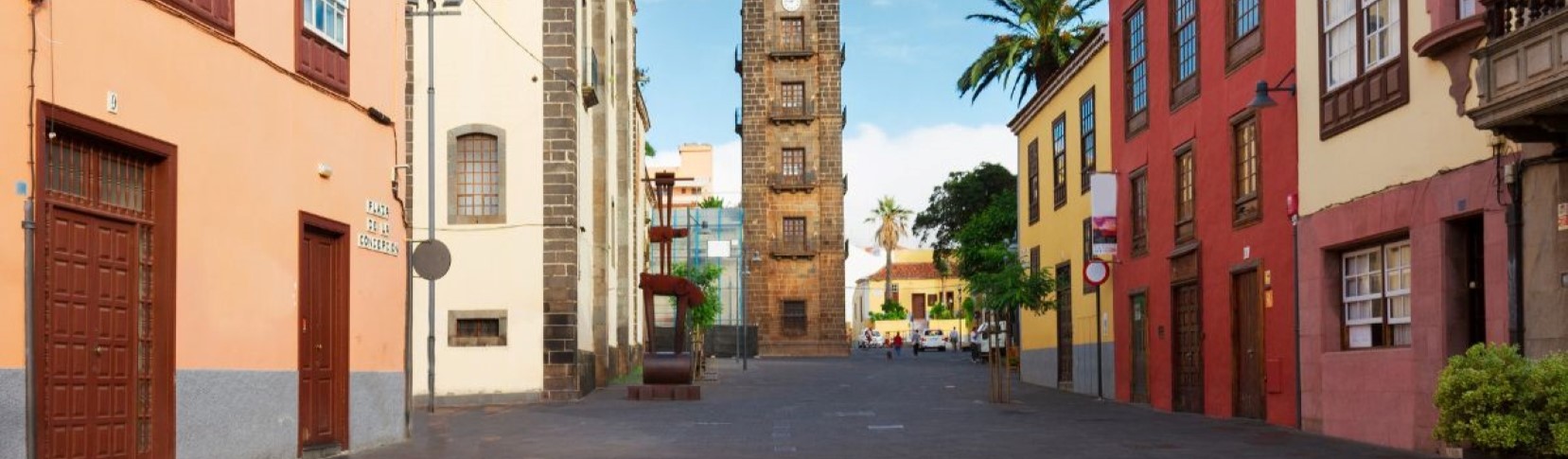
The Canary Islands have far more to offer than beaches and volcanoes. Over the centuries, the archipelago has built up an exceptional cultural heritage: colonial architecture, defensive fortresses, neo-Gothic cathedrals, UNESCO World Heritage cities, and pre-Hispanic sites that connect with the islands’ earliest inhabitants, the Guanches.
If you are travelling to the Canaries with a curiosity for history, the monuments you will find on each island tell a different and fascinating story.
Must-see monuments in Gran Canaria
Gran Canaria is home to some of the archipelago’s most significant historic buildings. Its capital, Las Palmas, and the inland municipalities are rich in everything from medieval fortresses to late Gothic treasures.
Catedral de Santa Ana
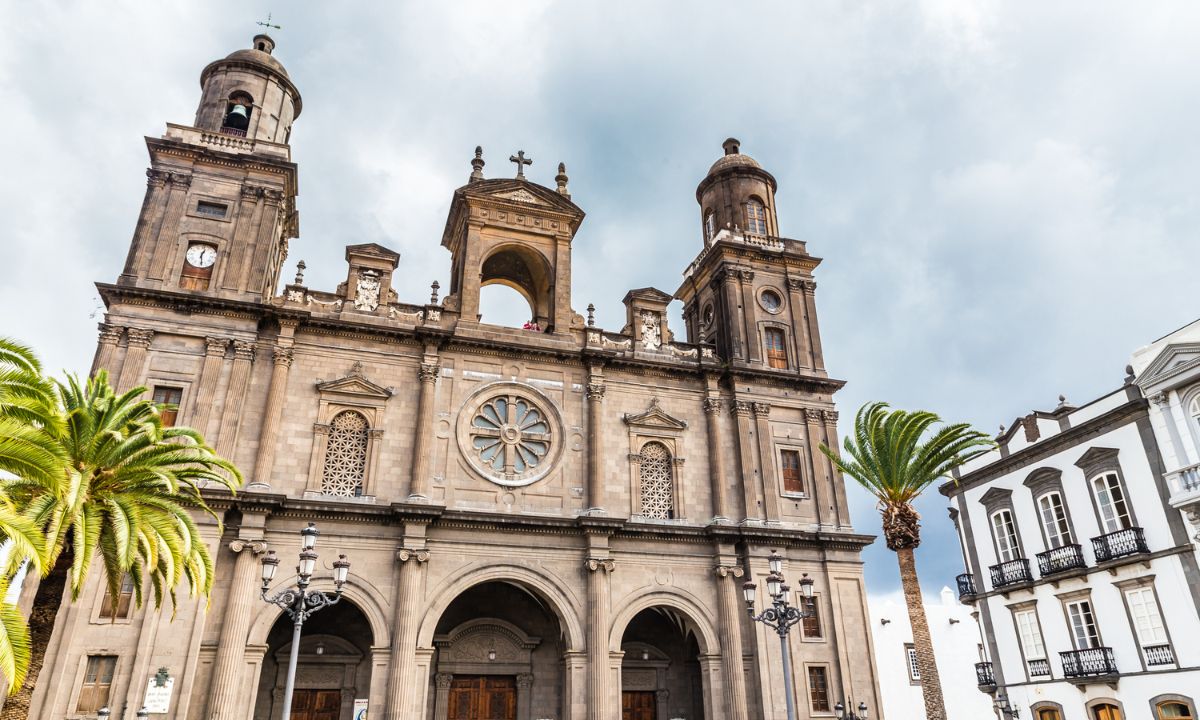
Located in the historic Vegueta quarter, the Cathedral of Santa Ana is one of the most important religious buildings in the archipelago. This majestic Gothic cathedral, with Renaissance elements, sits at the heart of the Vegueta old town.
Its construction spanned several centuries, which accounts for the blend of architectural styles visible both inside and out. In front of it lies one of the most photographed squares in Las Palmas.
Teatro Pérez Galdós
The Teatro Pérez Galdós, the largest opera house in the islands, takes its name from Gran Canaria’s most celebrated writer. Inaugurated in 1927, it was fully restored and reopened in 2007 with world-class acoustics. Its dome, painted by the artist Néstor de la Torre, is one of the building’s most outstanding artistic features.
Arucas Church
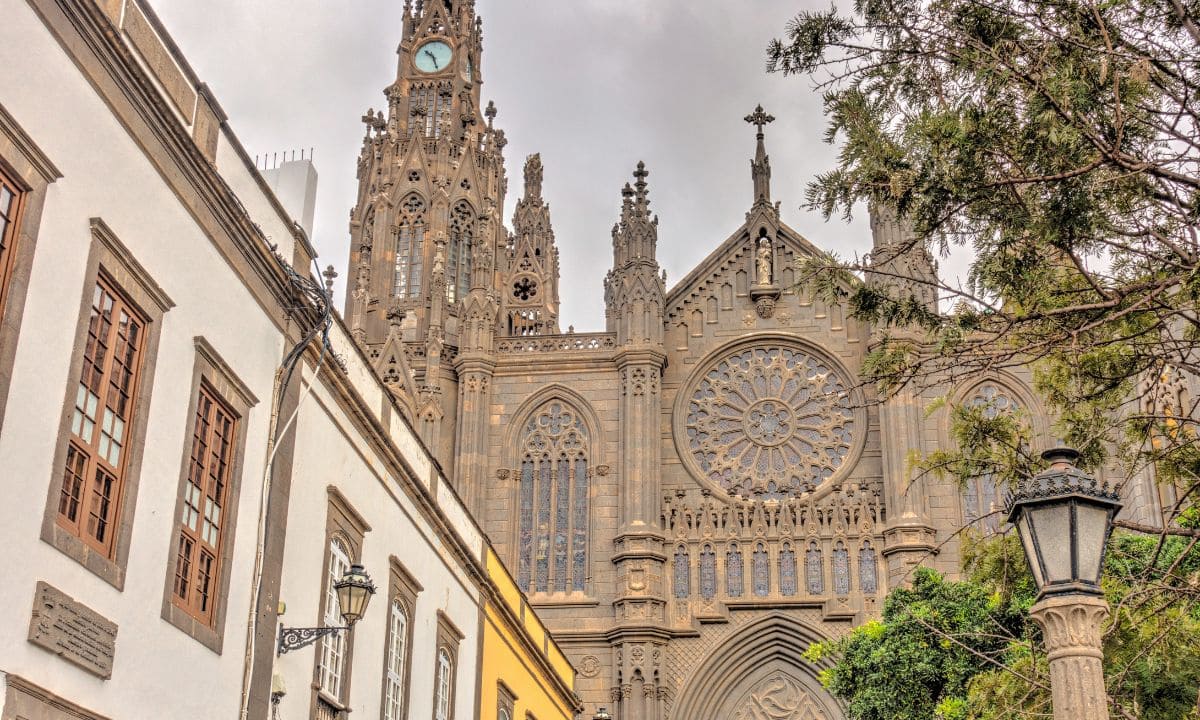
The Parish Church of San Juan Bautista in Arucas has been popularly known as a “cathedral” since its reconstruction in the early twentieth century. However, it does not officially hold that title. Its neo-Gothic architecture — with soaring towers, pointed arches and an exceptional stone façade — has earned it the status of a Cultural Heritage Site. It is open daily from 8:00 to 12:50 and from 17:30 to 20:00.
Casa de Colón
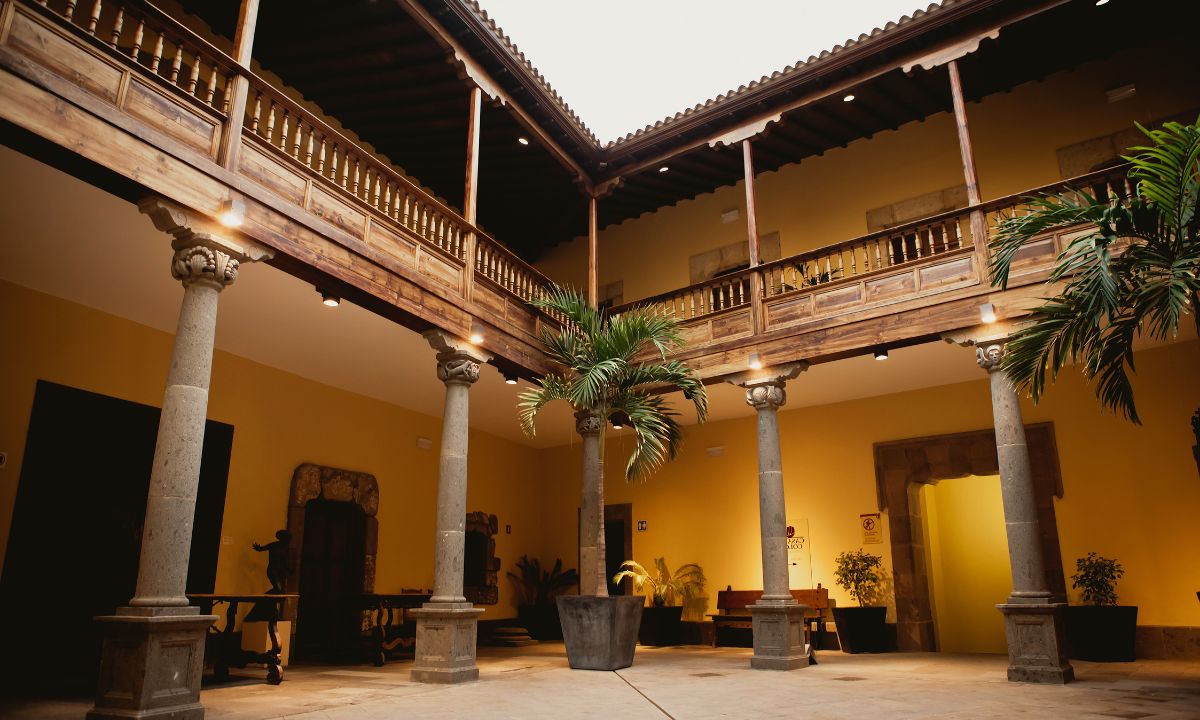
Also in the Vegueta quarter stands the Casa de Colón, a fifteenth-century palace linked to the figure of Christopher Columbus. According to historical tradition, the explorer lodged here during his stop in Gran Canaria before setting sail for the Americas in 1492. Today it is a museum tracing the ties between the islands and the New World, with free admission (conditions apply).
Historic monuments in Tenerife
Tenerife blends the colonial heritage of its historic towns with the boldness of contemporary architecture. Its monuments reflect centuries of history, from the Castilian conquest to the present day.
Cathedral of San Cristóbal de La Laguna
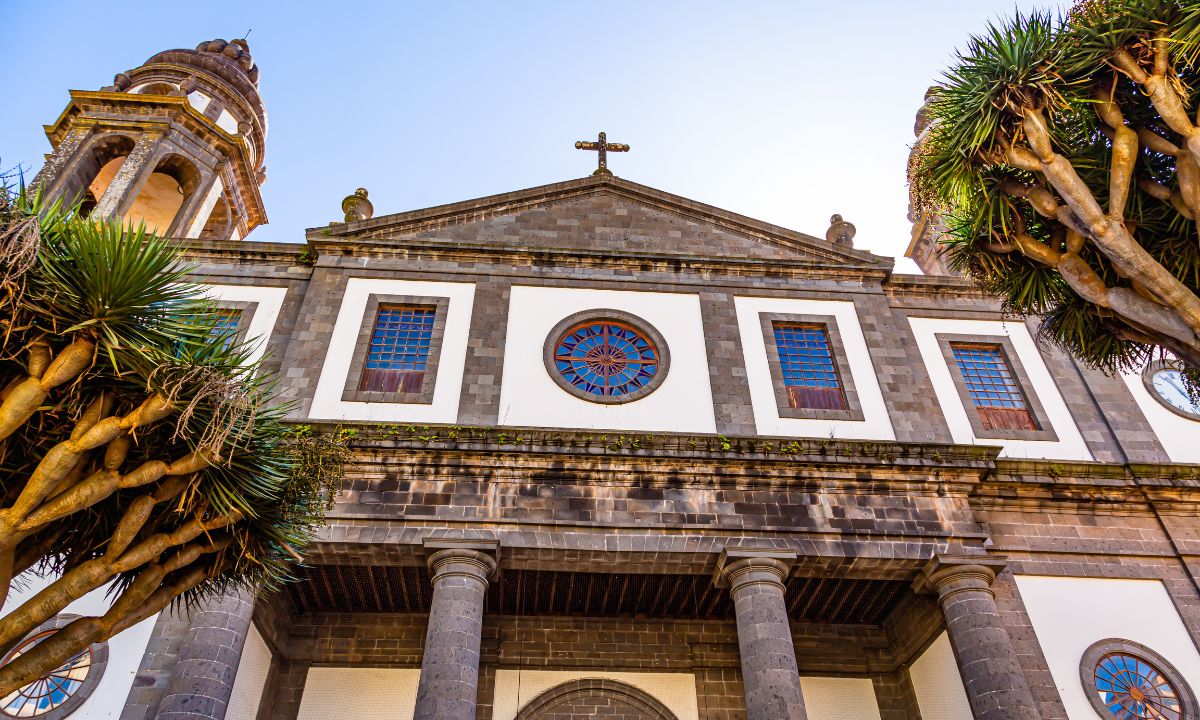
The city of San Cristóbal de La Laguna was declared a UNESCO World Heritage Site for its colonial street plan, which served as a model for many cities across Latin America. Within its historic centre stands the Cathedral, built from volcanic stone in warm saffron tones, with a three-nave structure, a Mudéjar-inspired timber ceiling and a 25-metre dome rising above the transept. Its interior houses works of art of exceptional value, including murals by José Aguiar and a sixteenth-century baptismal font.
Basílica de Nuestra Señora de la Candelaria
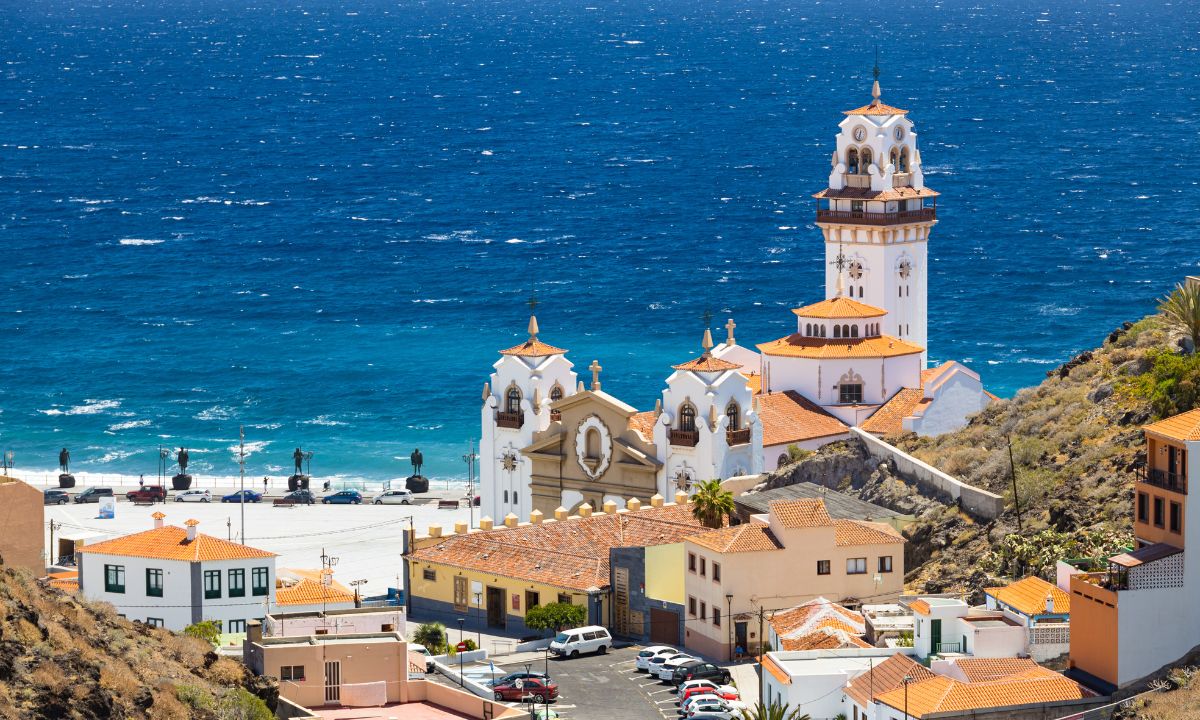
The Basilica of Nuestra Señora de Candelaria houses, in its main chapel, the image of the Virgin of Candelaria, the patron saint of the Canarian archipelago. Inside, there are numerous works of art, including a Baroque monstrance crafted in the Canaries during the eighteenth century. The surrounding square, with its statues of the Guanche menceys, is one of the most evocative settings in Tenerife.
Auditorio de Tenerife
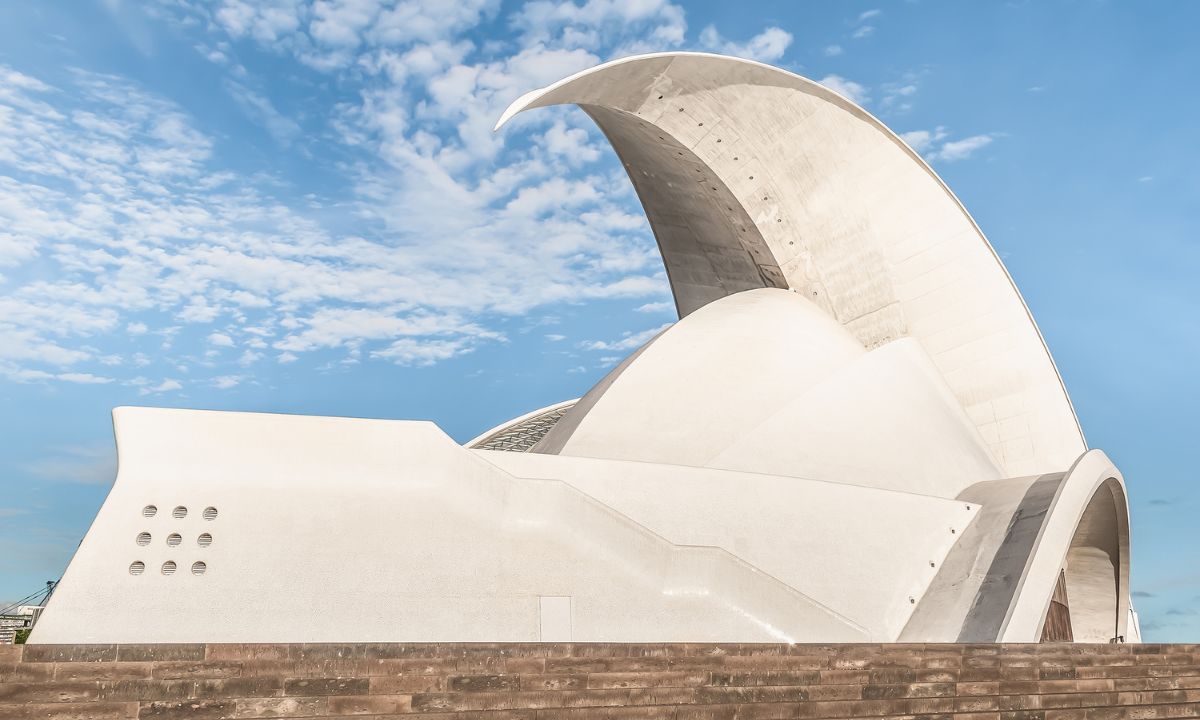
Designed by Santiago Calatrava and opened in 2003, the Auditorio de Tenerife is now one of the archipelago’s most recognisable buildings. Its silhouette, inspired by the waves of the Atlantic, has made it an icon of contemporary Spanish architecture and one of the most photographed landmarks in the Canary Islands.
Castillo de San Juan Bautista
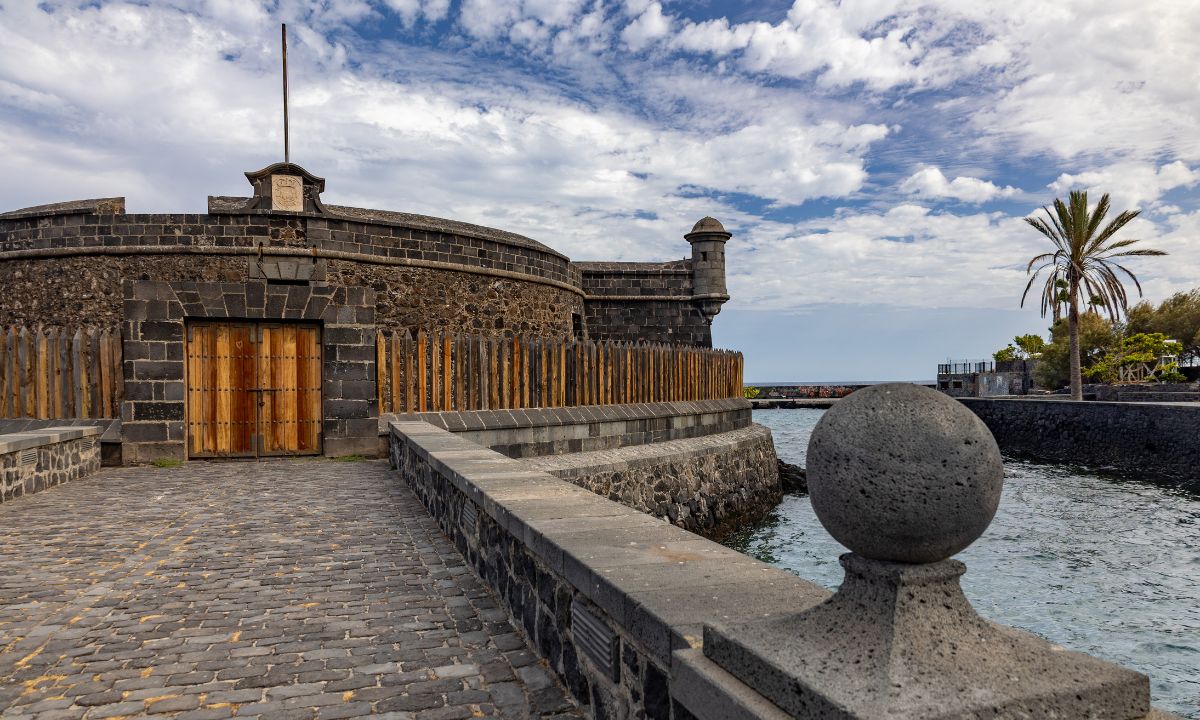
The Castillo de San Juan Bautista, also known as the Castillo Negro, was built in the seventeenth century to defend the port of Santa Cruz de Tenerife. Together with the Castillo de San Andrés, it formed part of the island’s defensive network against English and Dutch attacks. Today it is a Cultural Heritage Site and open for guided visits.
Palacio de Lercaro
Located in the historic centre of La Laguna, the Palacio de Lercaro dates from the sixteenth century and is one of the finest examples of traditional Canarian colonial architecture. Its carved wooden balconies and interior courtyard make it a must-see. It currently houses the Museum of History and Anthropology of Tenerife.
Pirámides de Güimar
The Pirámides de Güímar are one of Tenerife’s most intriguing archaeological mysteries: six stepped structures precisely aligned with the cardinal points, a fact that has puzzled historians and archaeologists alike since their discovery. Today they can be visited as part of the Ethnographic Park and Botanical Garden of Güímar, where four themed trails explore the history, botany and natural heritage of the archipelago. The park is open daily from 10:00 to 18:00.
Iconic monuments of La Palma
La Palma, known as La Isla Bonita, is home to one of the best-preserved historic centres in the entire archipelago. Its capital, Santa Cruz de La Palma, was one of the busiest ports in Atlantic trade during the sixteenth century.
Balconies of the Avenida Marítima
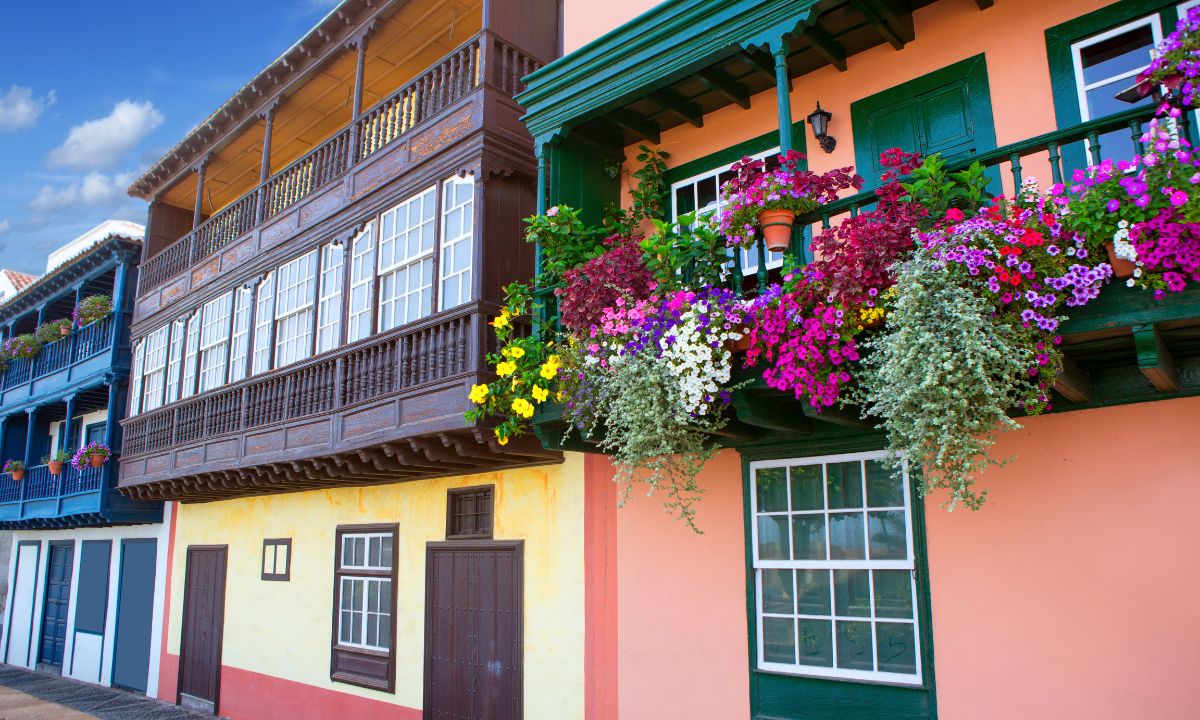
The famous wooden balconies of the Avenida Marítima are the most recognisable symbol of Santa Cruz de La Palma. These grand townhouses from the sixteenth and seventeenth centuries, with their overhanging galleries painted in vivid colours, represent traditional Canarian architecture in its purest form and have been declared a Cultural Heritage Site.
Castillo de Santa Catalina
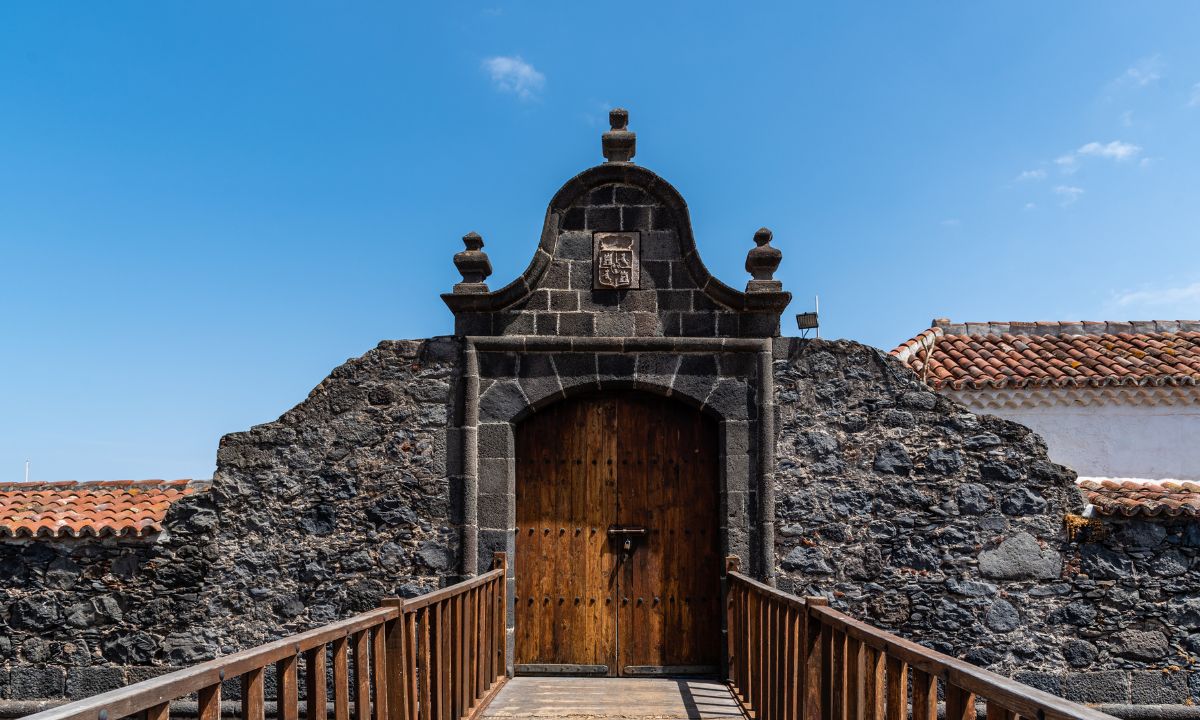
Built in the seventeenth century to protect the city from pirate raids, the Castillo de Santa Catalina stands on a promontory overlooking the sea. Its strategic position and excellent state of preservation make it one of La Palma’s most visited monuments.
Santuario de Nuestra Señora de las Nieves
A short distance from the centre of Santa Cruz de La Palma lies the Santuario de Nuestra Señora de las Nieves, home to the island’s patron image. The complex is part of a religious tradition dating back to the fourteenth century. Every five years, it hosts the Bajada de la Virgen, a festival declared of International Tourist Interest.
Notable monuments in Fuerteventura
Fuerteventura es la isla más antigua del archipiélago desde el punto de vista geológico, y su patrimonio histórico refleja siglos de colonización, resistencia y adaptación al entorno más árido de Canarias.
Casa de los Coroneles
The Casa de los Coroneles in La Oliva is one of the most imposing civic buildings in the islands. Built in the seventeenth century, it served as the residence of the military commanders who governed the island for over a hundred years. Its stately architecture — featuring a distinctive continuous wooden balcony and heraldic shields on the façade — has made it a symbol of Canarian historic heritage. It is currently a Cultural Heritage Site and open to visitors Tuesday to Saturday.
Church of Santa María de Betancuria
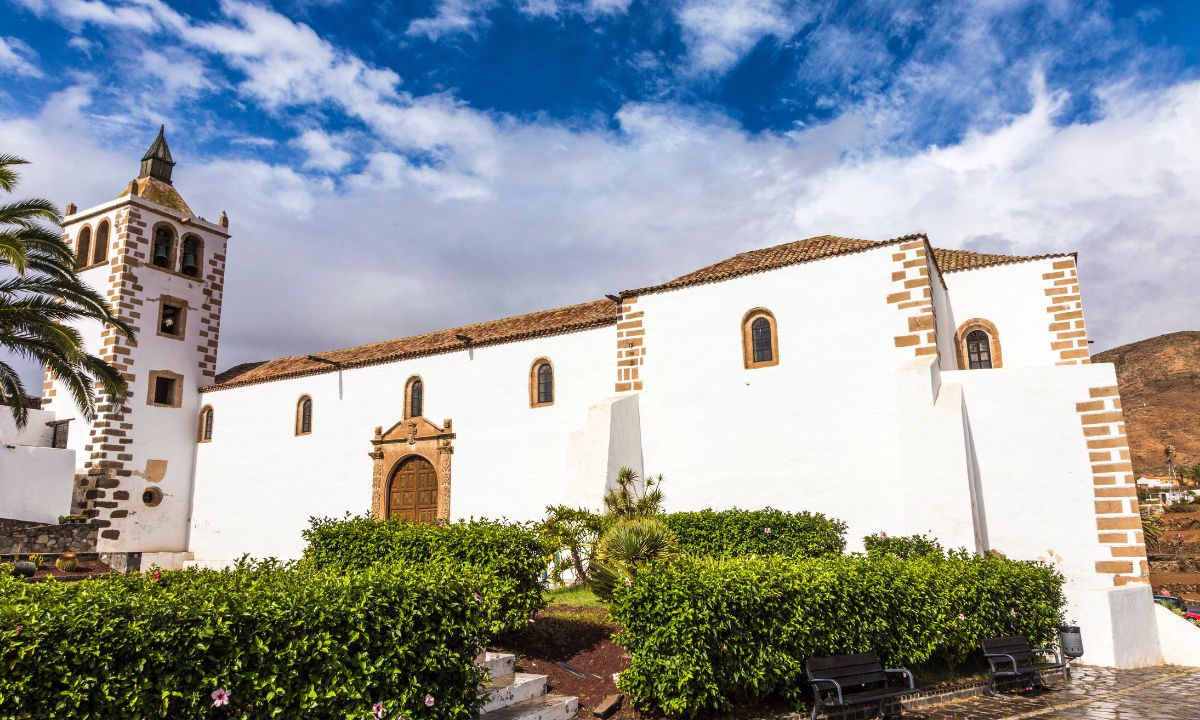
Betancuria was the first capital of Fuerteventura. The Church of Santa María, dating from the seventeenth century, is the oldest on the island and one of the key landmarks of Canarian cultural heritage. Opposite stands the Archaeological Museum, which displays artefacts from the Mahos — the indigenous people of Fuerteventura — making it a natural complement to any visit.
Molinos de Villaverde
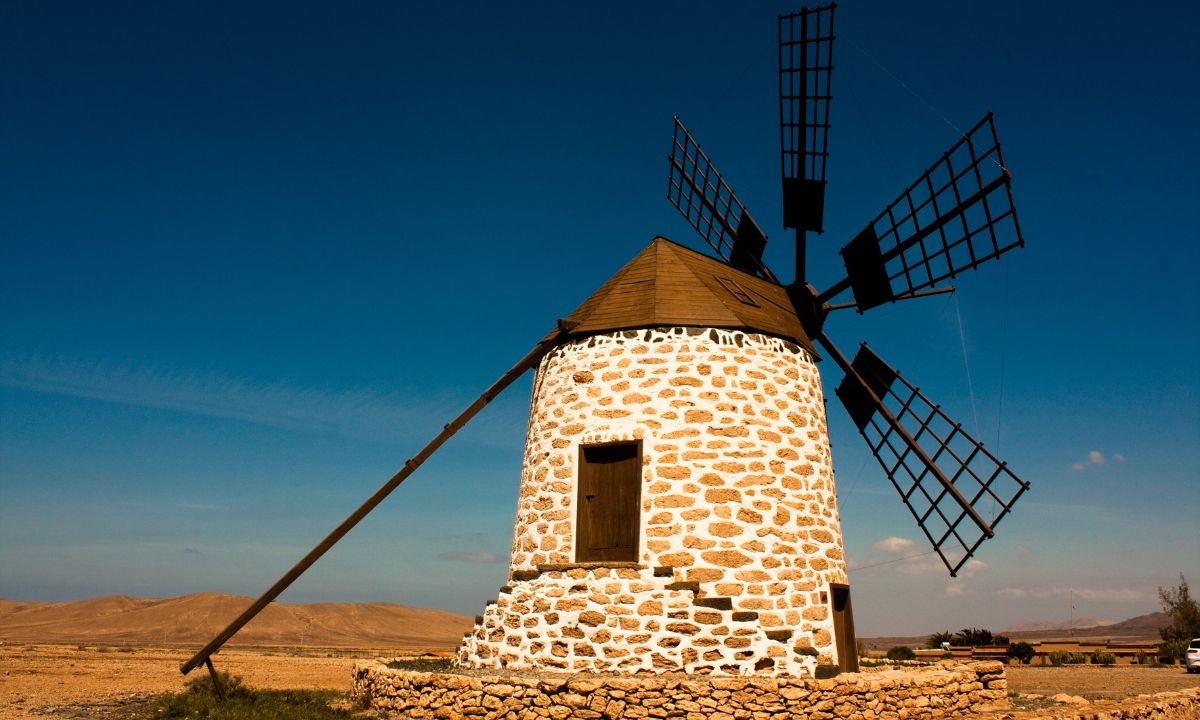
The Molinos de Villaverde are among the most characteristic features of the Majorero landscape. Built between the seventeenth and nineteenth centuries to grind grain, they now form part of the island’s protected rural scenery. Several have been restored and can be visited as part of an ethnographic trail through the interior of Fuerteventura.
Church of Nuestra Señora de Regla
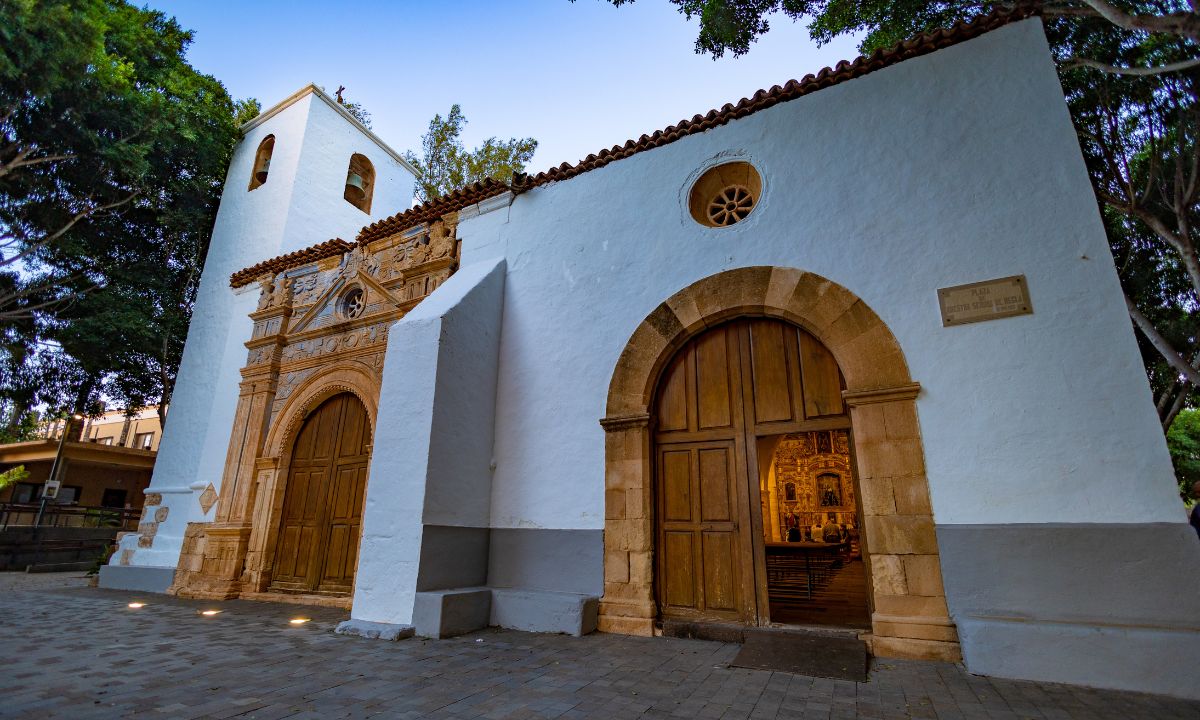
The Church of Nuestra Señora de Regla in Pájara is one of Fuerteventura’s most remarkable buildings, with origins dating to the seventeenth century. What sets it apart is its doorway: an extraordinary piece of copper-toned stonework featuring geometric motifs, serpents, suns, a moon and human faces, which some scholars have linked to sixteenth-century European symbolic iconography. The result is unlike anything else in Canarian religious architecture. It is listed as a Cultural Heritage Site.
The UNESCO heritage sites of the Canary Islands
The Canary Islands are home to several UNESCO-recognised sites that reinforce their standing as a leading cultural destination:
- San Cristóbal de La Laguna (Tenerife): declared a World Heritage Site for its colonial street plan, which influenced the layout of numerous cities across Latin America.
- Teide National Park (Tenerife): an active volcano and the highest peak in Spain at 3,718 metres above sea level, its national park was declared a UNESCO World Heritage Site for its outstanding universal value.
- Garajonay National Park (La Gomera): declared a World Heritage Site in 1986, known for its lush laurel forest — a relic of the ancient subtropical vegetation that once covered Europe millions of years ago.
To these can be added the Cultural Landscape of Risco Caído and the Sacred Mountains of Gran Canaria, recognised by UNESCO in 2019 for their archaeological and scenic significance.
The most photographed monuments in the Canary Islands
Some landmarks attract a particular concentration of visitors with cameras at the ready. These are the most shared:
- Auditorio de Tenerife: its white silhouette against the sea is the most viral architectural image in the islands.
- Balconies of the Avenida Marítima (La Palma): colour, light and colonial architecture in a single frame.
- Santa Ana Cathedral (Gran Canaria): the square that frames it is the perfect setting for urban photography.
- Casa de los Coroneles (Fuerteventura): a stately façade that contrasts sharply with the arid landscape around it.
- Pyramids of Güímar (Tenerife): a visual mystery that generates as much debate as it does photographic interest.
A cultural tour of the Canaries: how to plan your visit
Visiting the most representative monuments across the four main islands is entirely achievable by combining stays on each one. A suggested itinerary of 8 to 10 days might be divided as follows:
- Gran Canaria (2–3 days): Vegueta, Castillo de la Luz, Arucas Church, Cenobio de Valerón.
- Tenerife (2–3 days): La Laguna, Basilica of Candelaria, the Auditorio, ascent to Mount Teide.
- La Palma (1–2 days): Santa Cruz de La Palma, Avenida Marítima, Sanctuary of Our Lady of the Snows.
- Fuerteventura (1–2 days): Betancuria, Casa de los Coroneles, windmills of Villaverde.
Each island has its own identity, and combining all four offers a complete picture of the Canaries’ historic heritage.
Where to stay while exploring Canarian heritage
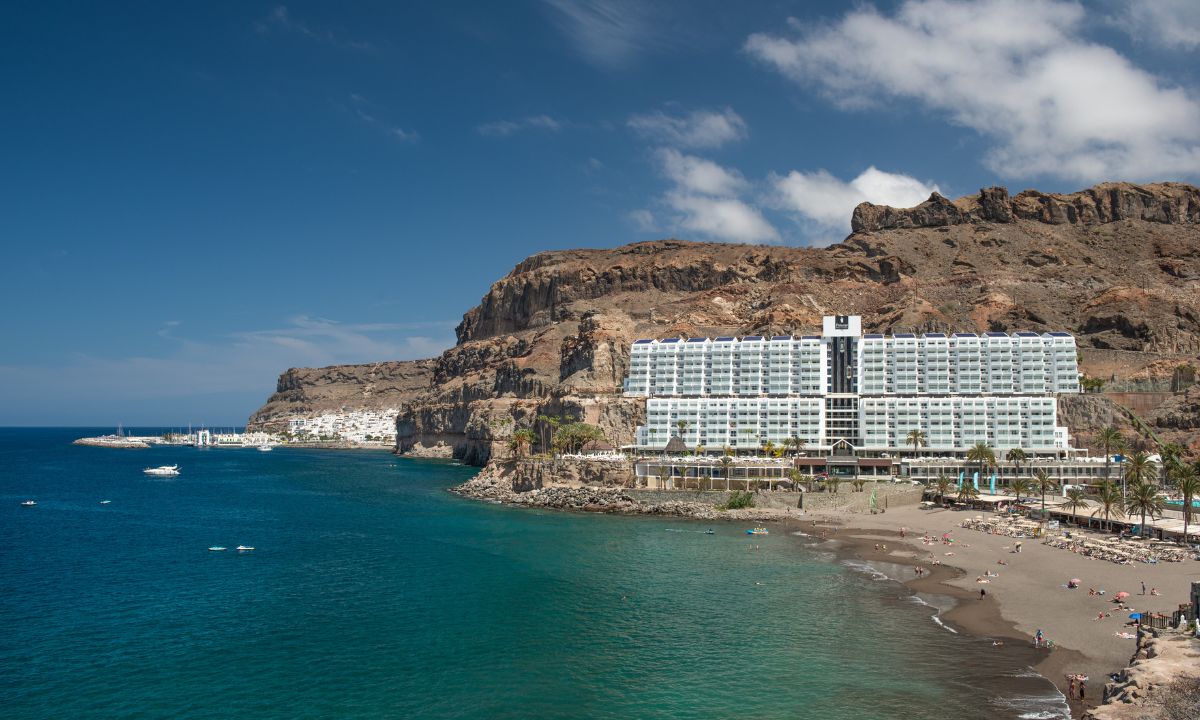
To make the most of a cultural tour of the islands, where you stay makes all the difference. Princess Hotels Canarias has properties on all four islands featured in this guide, all on an all-inclusive basis and within easy reach of the main historic sites.
In Gran Canaria, the Maspalomas Princess, Tabaiba Princess and Mogán Princess & Beach Club provide a convenient base for exploring Las Palmas and the island’s interior. For couples or solo travellers, the Gran Canaria Princess and TUI BLUE Suite Princess offer an adults-only (16+) atmosphere.
In Tenerife, the Guayarmina Princess and Princess Inspire Tenerife combine relaxation with easy access to the main cultural routes across the north and south of the island.
In Fuerteventura, the Fuerteventura Princess and Club Jandía Princess are ideal starting points for exploring Betancuria and the Majorero interior.
In La Palma, the La Palma Princess offers a peaceful setting from which to discover the island at your own pace. The historic and cultural heritage of the Canary Islands is as rich as its natural landscapes. Plan your route, book your stay, and discover each monument in your own time.
Categories: Canaries, Travel Tips, Fuerteventura, Gran Canaria, La Palma, Tenerife


Leave a Comment