










Discover some of the most important archaeological sites in the Canary Islands
‘Even the past can be changed’. So goes the quote from French philosopher Jean Paul Sartre, perfectly capturing how important archaeology remains to us today. The Canary Islands are relatively young in geological terms. But be that as it may, this science just keeps revealing new discoveries, changing how we think about the archipelago’s ancient settlers. So if you’re a fan of all things history and archaeology, this is the post for you.
Sites in Tenerife
Cueva de Bencomo cave
The Cueva de Bencomo is in Tenerife, located near the Humboldt viewpoint between Santa Úrsula and La Orotava. According to the experts, it was the home of the Guanche (the name given to the indigenous people of Tenerife) Bencomo, who was the penultimate ‘mencey’ (king) of the Taoro kingdom. Spain declared the cave an official Site of Cultural Interest in 1986.
The first part of the cave is six metres long, and just over 2.5 metres high. The second cavity is eight metres long, opening out towards the ravine on the western side. A fairly narrow passageway measuring 0.8 metres high joins the two caves.
Archaeological excavations took place between 2017 and 2018, and uncovered the remains of ceramics, animals, coal and necklace beads. Marks carved into the walls were also found, hinting at the existence of some kind of enclosure.
Cueva de Achbinico cave
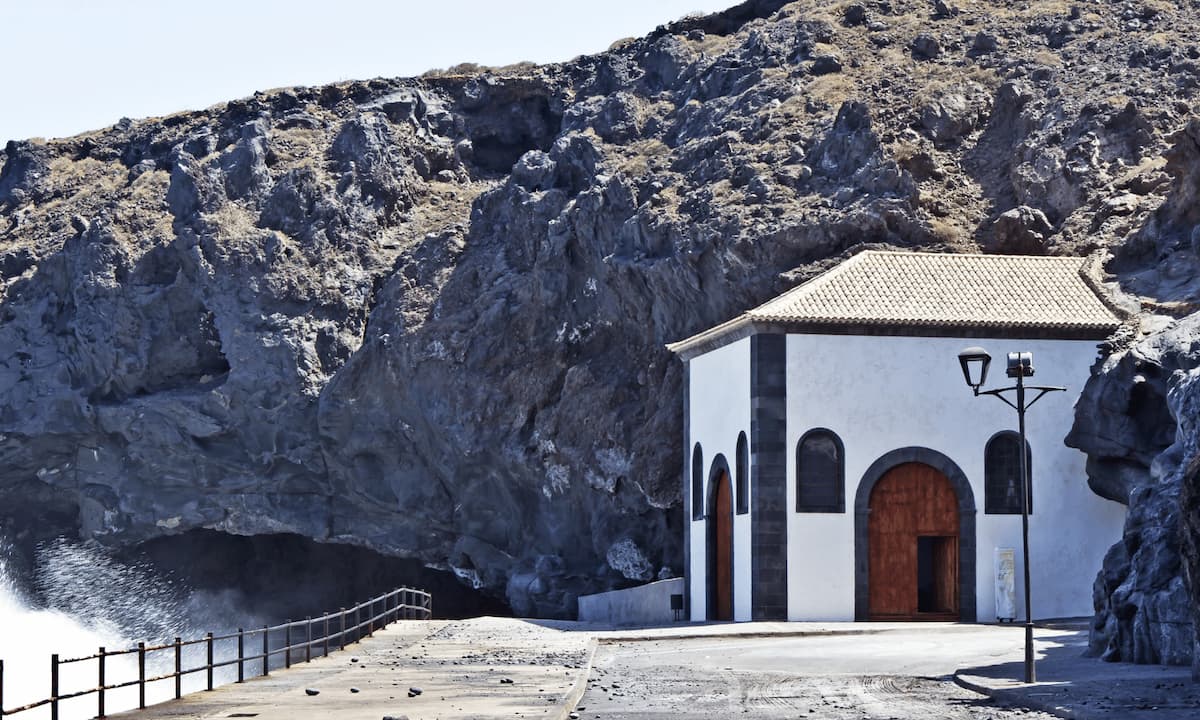
The famous Cueva de Achbinico is one of the most significant archaeological sites in the Canary Islands. This site, like San Blas, is home to an image of the Virgen de Candelaria, now the patron saint of the Canary Islands.
This was the first Christian sanctuary in the Canary Islands following the conquest. It’s in the municipality of Candelaria, which was part of the ancient Güímar settlement during the aboriginal era.
The cave was used for milking goats and – according to archaeological research – was where the image of the virgin would be worshipped. And did you know, they also found a number of archaeological artefacts from the Guanche period? This is why the cave is such an important historical asset. So important in fact, it was declared an official Site of Cultural Interest, as part of the Santuario de Candelaria.
In 1526, the image of the Virgin of Candelaria was moved to a new temple. The cave then became known as the Cueva de San Blas. After a fire broke out in the Basilica and the Convento de los Padres Dominicos, the image was returned to the cave. And in 1789, the chapel we see today was built.
Sites in Gran Canaria
The La Cueva Pintada de Gáldar (Painted cave of Gáldar)
The Cueva Pintada de Gáldar is the island’s most important site. It’s located in the town from which the municipality takes its name. In fact, the ancient settlers called it Agaldar, which was the name of the island’s first city.
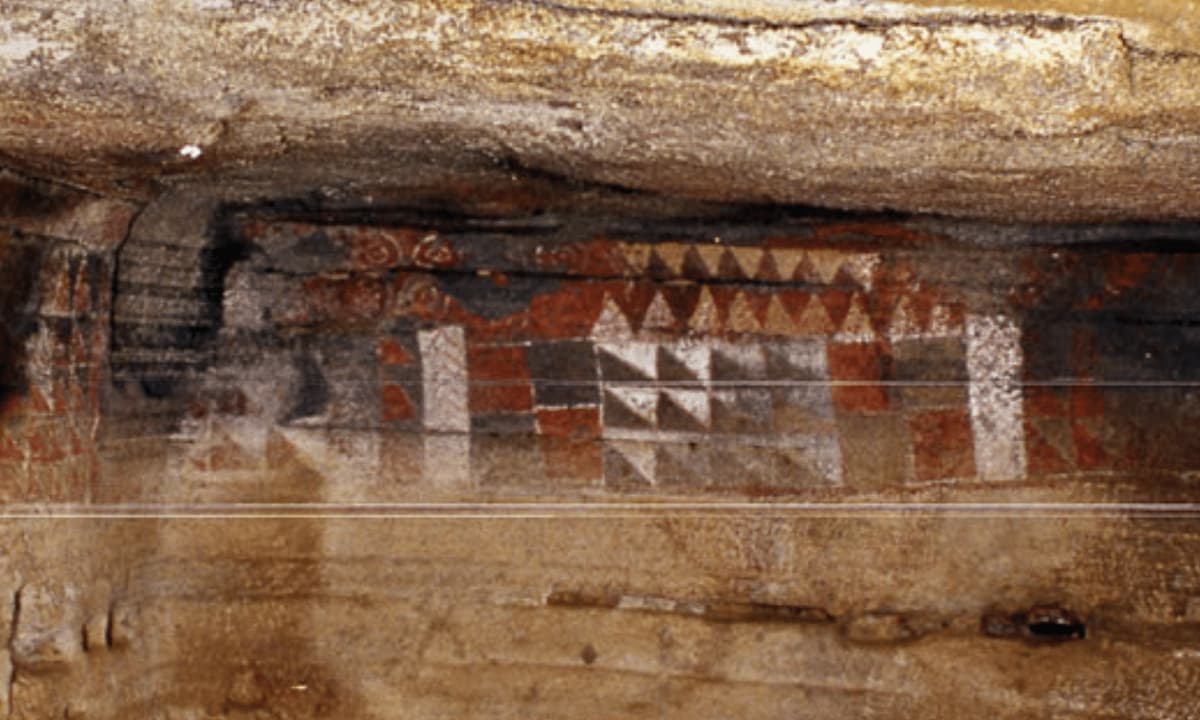
The site was discovered in the 19th century, when some of the town’s residents were taking a walk and came across what looked like cave paintings. These included a series of geometric paintings, believed to correspond to calendars. However, it wasn’t until more than a century later that the enormity of this cave came to light.
In 1987, a series of excavations revealed the ancient pre-Hispanic settlement of Agáldar. A village with more than 50 houses and artificial constructions, now rebuilt thanks to digital tools.
It’s now one of the top archaeological museums in Gran Canaria. Of all the discoveries that make the Cueva Pintada special, one thing stands out in particular. A staggered collection of constructions creating a hamlet reaching from the foot of the ravine to the current historic quarter of the city, which can help us better understand the social organisation of the aboriginal society.
Risco Caído
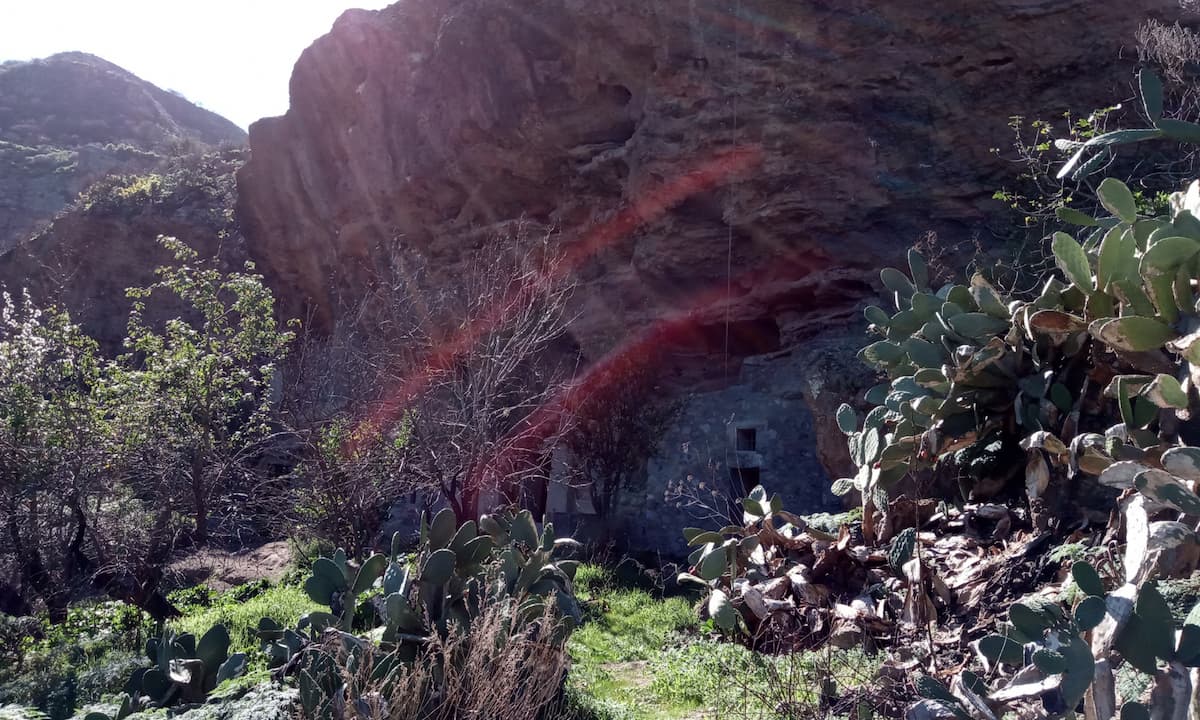
Risco Caído was declared a UNESCO World Heritage Site on 7 July 2019. It’s one of the most recent sites to be added to the list of the most important sites for historical research of the islands. It’s located on the left-hand side of the Barranco Hondo ravine, around 100 metres above the river in the municipality of Artenara.
The 21 caves were excavated by hand from the volcanic rock, and until now, nobody has really understood what they were for. Some historians say it was an agricultural site, used for storage. But others disagree, seeing it instead as a sacred gathering place, formerly known as Almogarén, where aboriginal priests (known as ‘faycanes’) possibly performed religious rites and worship.
And here’s another curious fact… did you know these caves have a hole on the surface, where the sunlight – and moonlight – illuminates different geometric shapes? It’s a must-see.
Sites in La Palma
Cueva de Belmaco cave
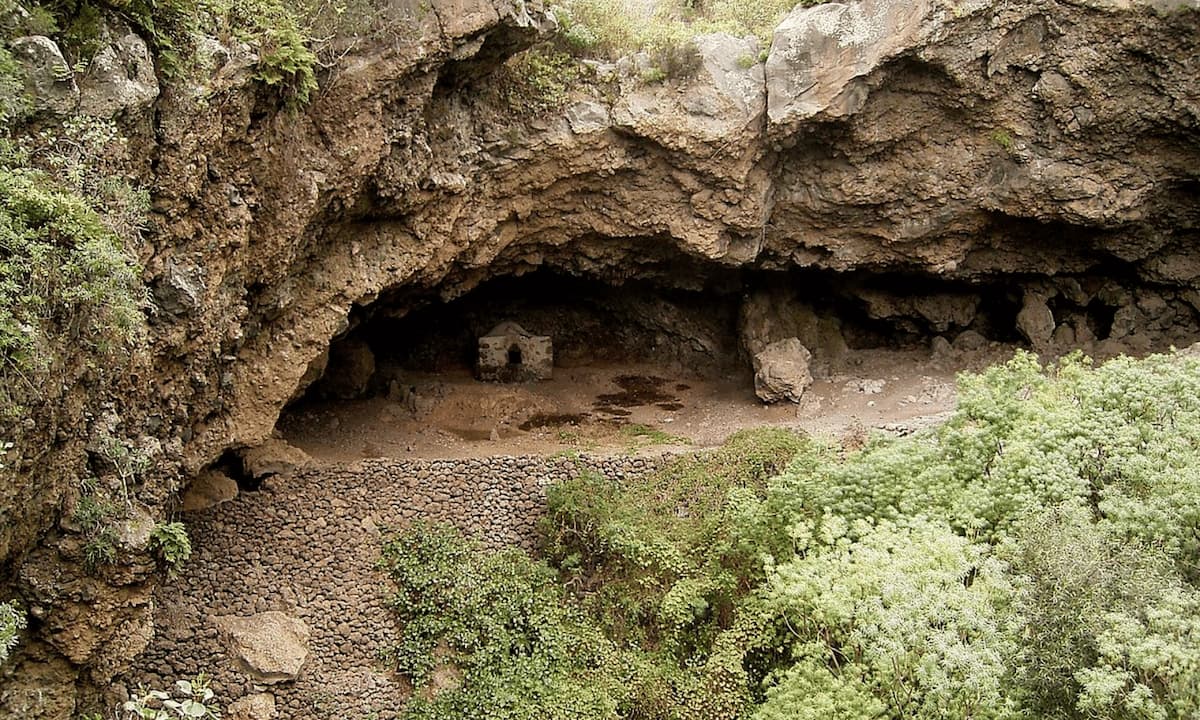
The Cueva de Belmaco is located in Belmaco Archaeological Park on the island of La Palma. The cave engravings found there are thought to be some of the oldest in the Canary Islands. This site is in the municipality of Mazo, in the east of the island.
The cave measures 35 metres long and is up to 10 metres high in parts. Inside, you can see huge blocks with curvilinear designs engraved into the surface of the rock. Some sources claim that it was discovered by the military governor of La Palma, Domingo Van de Walle, in 1752, who discovered it on a walk.
The meaning of these carved symbols has been the subject of intense debate over time. From José Viera and Clavijo who saw them as simple scribbles, to contemporary researchers such as J.F. Navarro Mederos who claim them to be ritualistic, intended to invoke the rains.
La Zarza y La Zarcita
La Zarza y La Zarcita is an archaeological site in La Palma, and is an example of Benahoarite culture, typical of the island. It was discovered in 1941 by Don Ramón Rodríguez Martín.
The area is home to Benahoarite cave engravings, pastoral settlements and various seasonal settlements. It’s considered the Sistine Chapel of cave paintings in La Palma. And thanks to its size and complexity, it’s unlike any other site in the Canary Islands.
La Zarza boasts 39 different panels of engravings on both sides of the ‘caboco’ (the pre-Hispanic word for cave), although it’s hard to work out where one comes to an end and the other begins in some cases.
Sites in Fuerteventura
Cueva de Villaverde cave
The Cueva de Villaverde is in the position of a large lava tube spanning 190 metres in length, narrowing as it extends. It’s located on in the municipality of La Oliva on volcanic terrain.
It was discovered by chance in 1979. Research on the site has helped us to learn more about the lives of the ancient inhabitants of Fuerteventura.
This is a particularly noteworthy site because you can see how part of it was used as a dwelling, and because of the numerous remains digs have uncovered. The remains found include ceramics, animal remains and household remains. In fact as recently as this September, a group of archaeologists discovered a vessel that could be more than a thousand years old.
Pared de Jandía wall
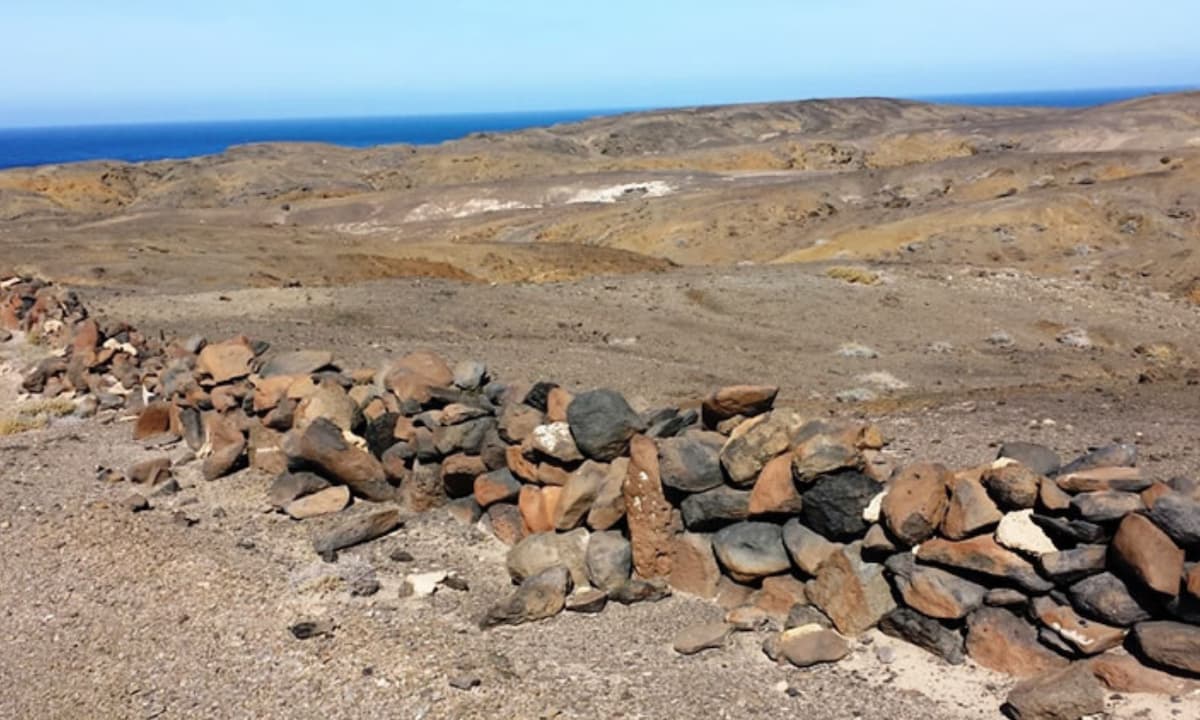
The Pared de Jandía is an aboriginal construction spanning over six kilometres from the north to the south of the island. And the evidence suggests this stone wall once stretched the full distance from sea to sea. Why?
It used to be thought that La Pared was the division between two territorial boundaries, isolating the Jandía Peninsula and marking out the kingdoms of Jandía and Maxorata. But this is just a theory, and plenty of experts disagree, who think that territorial boundary was in fact more to the north. This is why the more widespread theory is that ‘La Pared’ was a defensive structure, built to prevent disputes between the region’s shepherds and ranchers.
Whichever theory proves correct, it’s thought to be one of the most important archaeological sites on the island of Fuerteventura thanks to its size, the associated 40 structures, and the wealth of archaeological remains found there.
Categories: Canaries, Fuerteventura, Gran Canaria, La Palma, Tenerife


Leave a Comment