
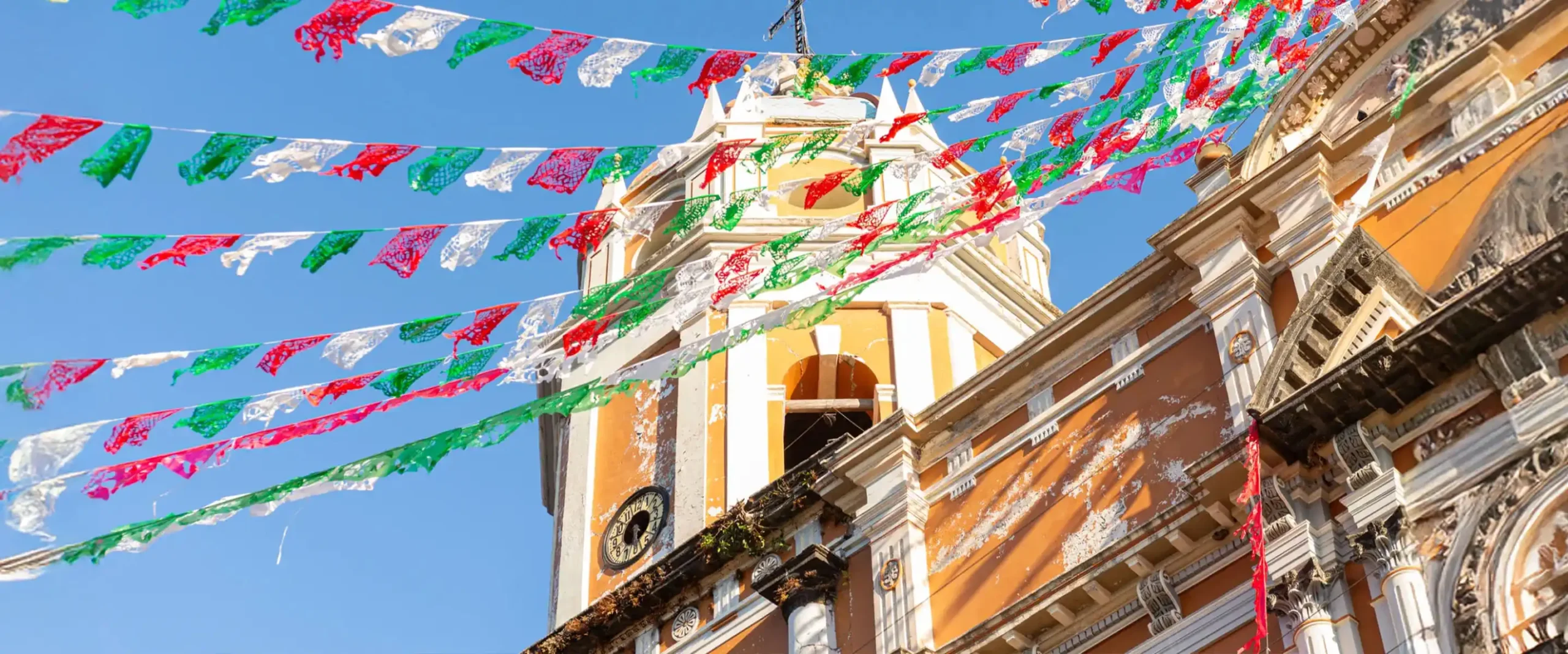
Discover the Mexican Revolution from Riviera Maya:
- The story behind Revolution Day
- Traditions that keep the Mexican Revolution alive
- How the Mexican Revolution is celebrated in Riviera Maya
- Experience the Revolution at Princess Hotels
Every November 20th, Mexico looks back on one of the events that forever transformed its history. Parades, music, traditional costumes and Mexican flavors recall the beginning of a movement that sought to build a fairer country and remains an essential part of the national identity.
Mexican Revolution Day is much more than a date on the calendar: it’s an opportunity to honor those who fought for democracy, social justice, and the rights of farmers and workers.
It’s also a colorful celebration that brings historical memory together with the cultural expressions of each region.
In this article, you’ll learn about the origins of the Mexican Revolution, its most iconic figures, the traditions that keep its legacy alive, and how the day is commemorated in Riviera Maya and at Princess Hotels.
The story behind Revolution Day
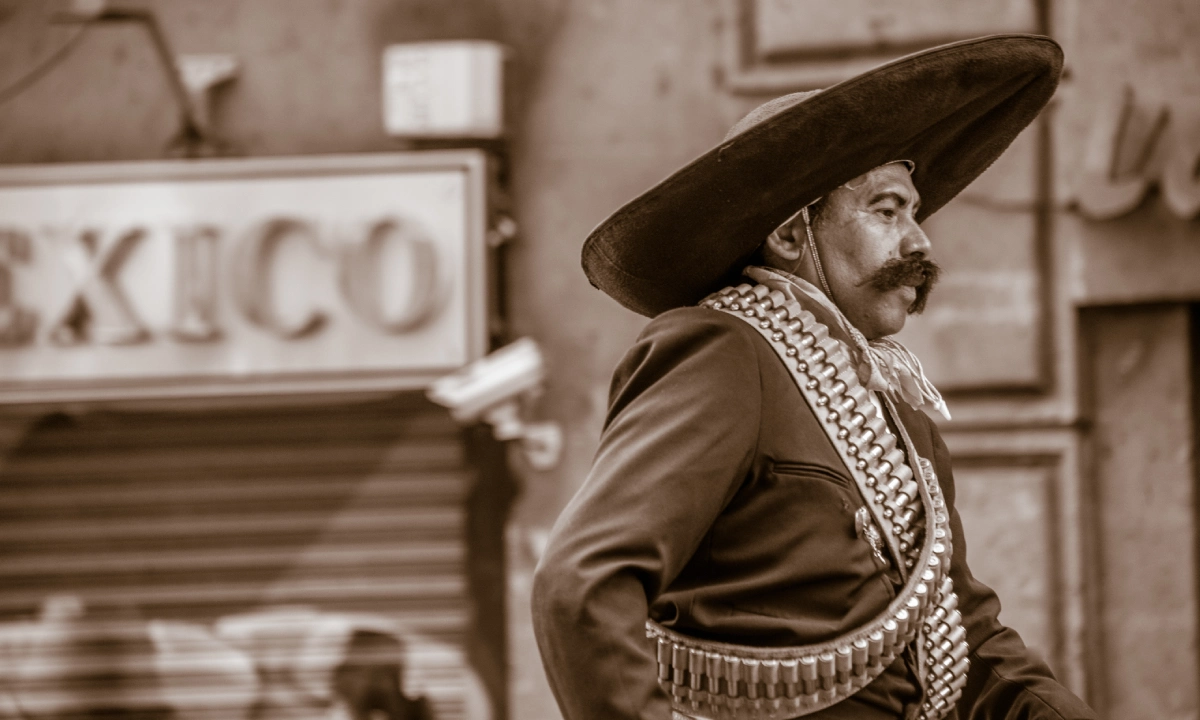
The Mexican Revolution began on November 20th, 1910, after more than three decades of Porfirio Díaz’s rule.
Although the country experienced economic growth and modernization during the Porfiriato, its benefits did not reach everyone equally. The concentration of land ownership, harsh working conditions, social inequality, and lack of political participation created deep discontent.
Francisco I. Madero, an advocate for free elections and the principle of no re-election, called on the Mexican people to take up arms through the Plan of San Luis. His call sparked a movement that soon brought together different demands and leaders across several regions of the country.
Its leading figures included Emiliano Zapata, a symbol of the peasant struggle and the demand for “Land and Liberty”; Francisco “Pancho” Villa, leader of the Division of the North; Venustiano Carranza, a central figure in the Constitutionalist movement; and Álvaro Obregón, one of the Revolution’s leading military strategists.
Thousands of women also took part in the Revolution. Popularly known as adelitas or soldaderas, they played essential roles as combatants, nurses, messengers, cooks, and supply coordinators.
The Revolution was neither brief nor uniform. It was marked by alliances, conflicts, and different visions for Mexico’s future. One of its most important legacies was the Constitution of 1917, which was groundbreaking in its recognition of social rights. Its provisions on education, land ownership, and workers’ rights laid foundations that continue to influence public life in Mexico.
That’s why remembering November 20 also means reflecting on values that remain relevant today: democracy, equality, social justice, and the protection of collective rights.
Traditions that keep the Mexican Revolution alive
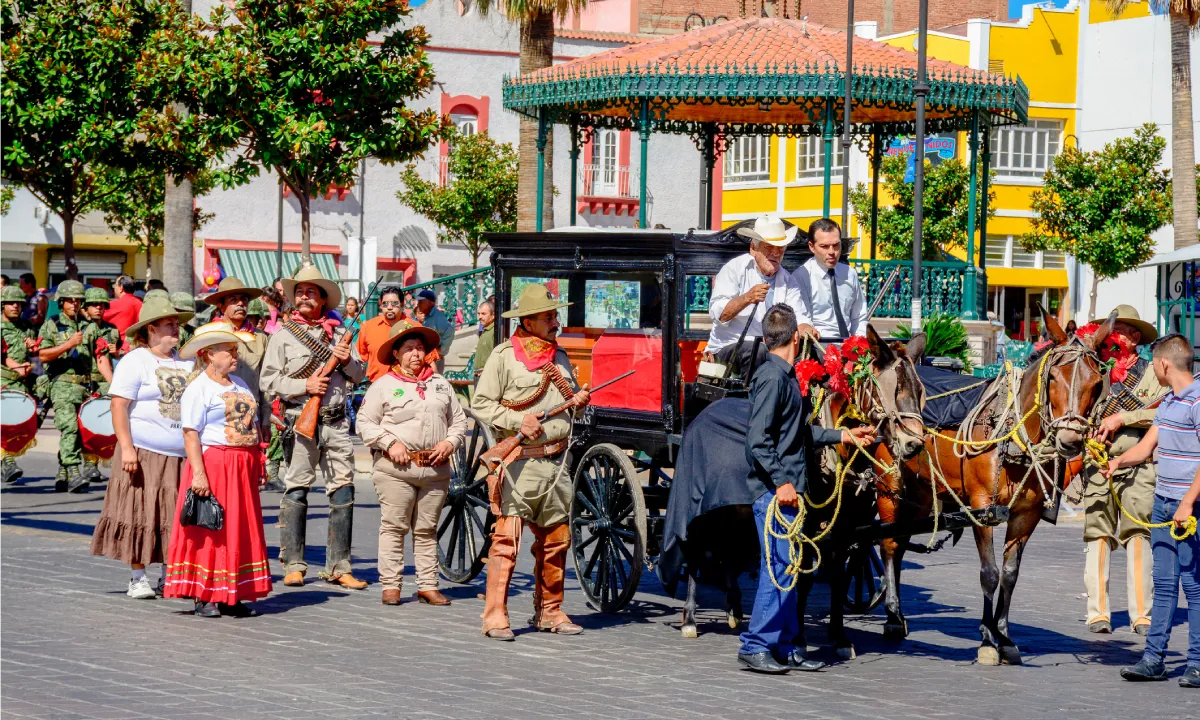
Across the country, the anniversary is commemorated with civic ceremonies, tributes, and parades.
Unlike other national celebrations that are primarily military in nature, Revolution Day parades often feature sports displays, gymnastic routines, and participation from schools, associations, and various community organizations.
Cultural and school festivals also play a special role. They often include reenactments of historical events, folk dances, and costumes inspired by revolutionaries, adelitas, and figures from the early 20th century. Pancho Villa-style mustaches, sombreros, bandoliers, and full skirts have become familiar features of the day.
Music helps preserve the memory of the movement. Revolutionary corridos tell stories of heroic deeds, figures, and events from the era, passing these stories down from one generation to the next.
Food is also part of the celebration. Although there is no single official dish for Mexican Revolution Day, many gatherings and festivals feature traditional flavors and easy-to-share recipes, such as tamales, tacos, enchiladas, pozole, mole, Mexican street snacks, and aguas frescas. The selection varies from state to state, making the day a showcase of the country’s enormous culinary diversity.
Here, we look at 7 traditional Mexican dishes that could take center stage at this celebration.
How the Mexican Revolution is celebrated in Riviera Maya
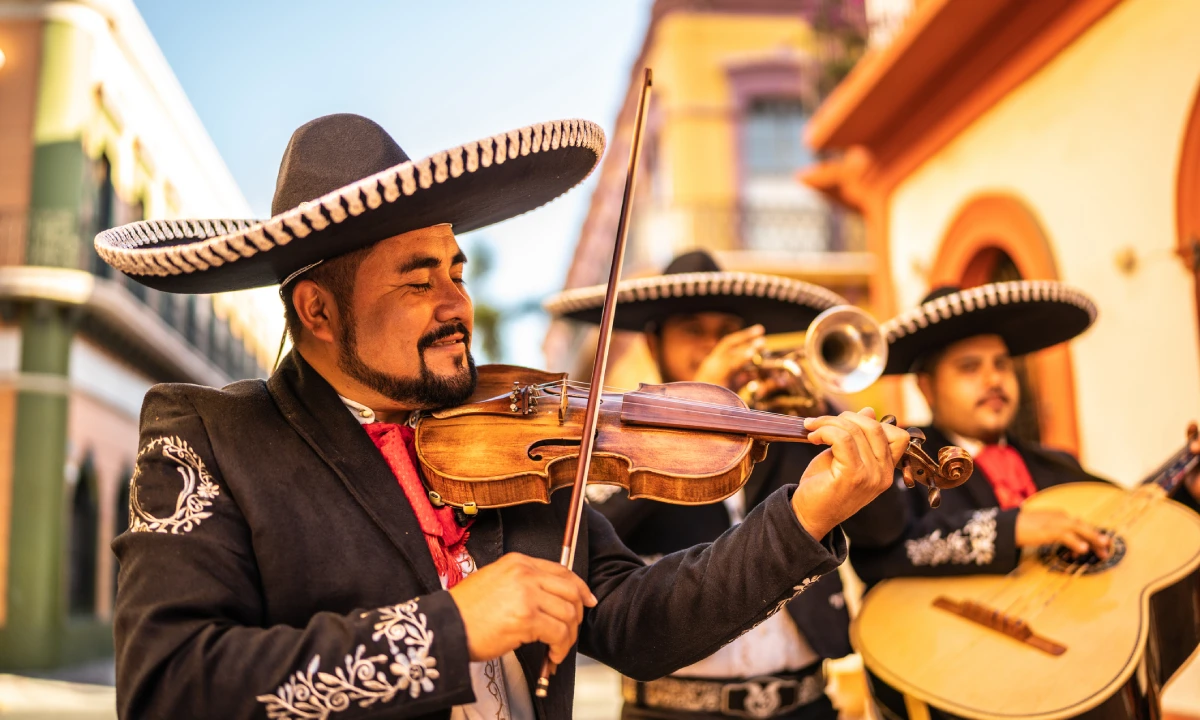
In Riviera Maya, national history meets the joyful, multicultural spirit of the Mexican Caribbean.
Municipalities and communities organize civic events, festivals, and parades featuring students, athletes, public institutions, cultural groups, and emergency services.
In Playa del Carmen, the anniversary is usually marked with a civic and sports parade through the city streets. Participants perform routines, athletic demonstrations, and choreographies, as well as displays inspired by the Revolution, while residents and visitors gather to enjoy the procession.
Cultural centers and schools may complement the day with regional dances, exhibitions, Mexican music, and educational activities.
The schedule, times, and routes change each year, so it’s a good idea to check the official Playa del Carmen City Council channels before planning your visit.
This celebration offers a different way to discover the destination: beyond its beaches and natural landscapes, it lets you explore Mexico’s history and traditions in one of its most iconic tourist regions.
Experience the Revolution at Princess Hotels
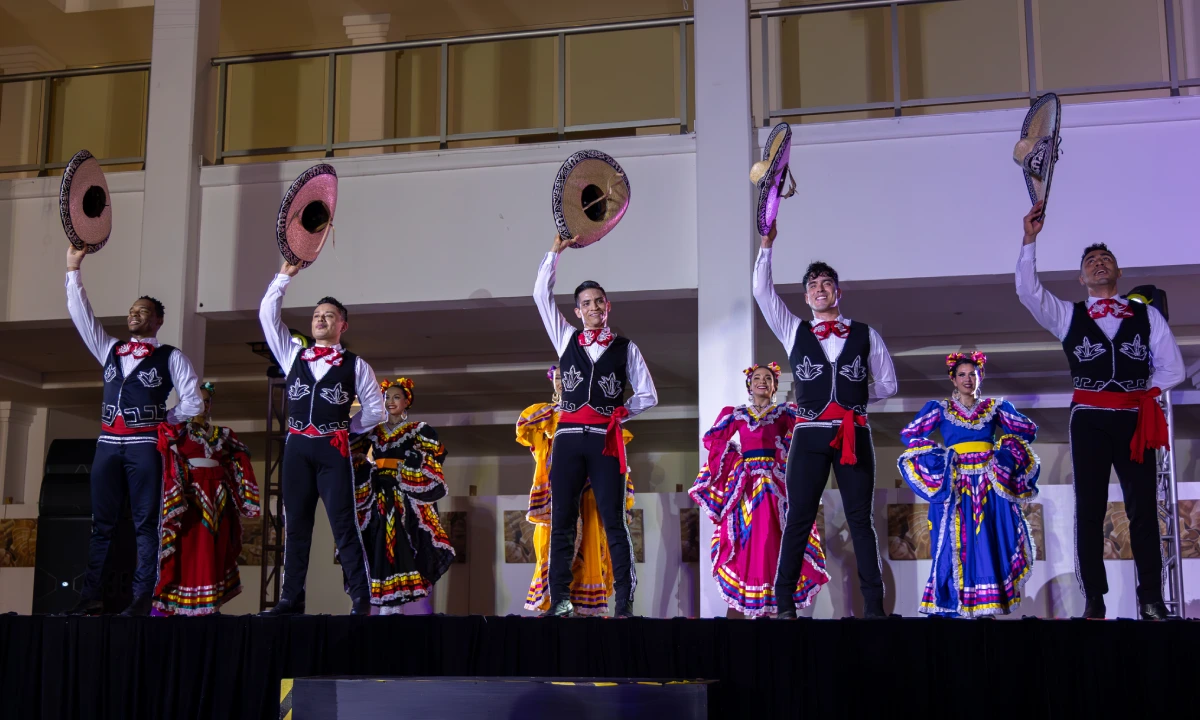
Staying at Princess Hotels Riviera Maya in November lets you combine a relaxing Caribbean getaway with an experience inspired by Mexican culture.
It’s the perfect opportunity to discover some of the country’s cultural richness while still enjoying the resort’s pools, gardens, restaurants, and relaxation areas. Whether you’re visiting Mexico for the first time or want to reconnect with its traditions, experiencing November 20th in Riviera Maya adds a special touch to your vacation.
At our hotels, you’ll find activities and dishes that let you experience Mexican culture.
Mexican Revolution Day commemorates the beginning of a movement that reshaped the country’s political and social life.
In Riviera Maya, the day offers an opportunity to discover a different side of Mexico and explore its history in an incomparable setting.
We invite you to experience it with us at Princess Hotels, where hospitality, culture, and the spirit of the Caribbean come together to create a memorable vacation.
Frequently asked questions about the Mexican Revolution
- What is celebrated in Mexico on November 20, and why is the Mexican Revolution important?
November 20th commemorates the beginning of the 1910 Mexican Revolution, a movement that profoundly transformed the country’s political and social life and was connected to demands for democracy, social justice, workers’ rights, and access to land.
- What happened on November 20, 1910, and who started the Mexican Revolution?
The Mexican Revolution began on November 20th, 1910, following Francisco I. Madero’s call to action in the Plan of San Luis. It called on people to rise up against Porfirio Díaz’s government and advocated, among other principles, free elections and no re-election.
- What are the main traditions of Mexican Revolution Day?
Celebrations often include civic and sports parades, ceremonies, historical reenactments, folk dances, Mexican music, and school and cultural activities. Traditional dishes from different regions of the country are also commonly featured.
- How is Mexican Revolution Day celebrated in Riviera Maya?
In Riviera Maya, the day may be commemorated with civic events, parades, cultural activities, and displays related to Mexico’s history. In Playa del Carmen, for example, a civic and sports parade is usually held, although the schedule and route may change each year.
- Is there a Mexican Revolution parade in Playa del Carmen that I can attend during my vacation?
Yes. Playa del Carmen usually celebrates November 20th with a civic and sports parade featuring schools, athletes, institutions, and community groups. If you’d like to attend, check the City Council’s official schedule, as times and routes may vary from year to year.
- What Mexican food is traditionally eaten to celebrate Revolution Day?
There is no official dish for this celebration. Traditional foods such as tamales, tacos, enchiladas, pozole, mole, Mexican street snacks, and aguas frescas may be served at gatherings and festivals, though the options depend on the region.
- What role did the adelitas play in the Mexican Revolution, and why do they feature in celebrations?
The adelitas, or soldaderas, were women who took part in the Mexican Revolution in many different ways, serving as combatants, nurses, messengers, cooks, and supply coordinators. Their image has become one of the most recognizable symbols of the era and often appears in reenactments and festivals.
- What can I do in Riviera Maya in November to experience Mexican culture beyond the beach?
November is a great time to combine a relaxing stay in Riviera Maya with cultural activities. Around November 20th, you can enjoy parades, civic events, and local celebrations, as well as discover the region’s Mexican cuisine, music, and other traditions.
- Can I experience the Mexican Revolution celebrations if I stay at Princess Hotels Riviera Maya?
Yes. Staying at Princess Hotels Riviera Maya lets you combine a Caribbean vacation with the opportunity to experience Mexican celebrations and traditions taking place in the area in November. You can also enjoy activities and dining options inspired by Mexican culture at the resort.
- Is it worth traveling to Riviera Maya in November to experience Mexican traditions?
Yes. In November, you can enjoy Riviera Maya’s beaches and landscapes while also discovering important Mexican traditions. November 20th offers a particularly interesting opportunity to learn about the country’s history through parades, music, food, and local cultural expressions.